Welcome to The Responsible AI Audit™ Brief. Skills4Good AI’s weekly audit of a real AI failure and the questions it should have raised before anyone would have trusted it.
This is the next in our series on The Duty to Verify AI. This week’s story comes from hiring, but the lessons apply to any professional with a duty of competence, a reputation to protect, and a responsibility to the public interest.
The Quick Facts
At 12:55 a.m., Derek Mobley applied for a customer service job. At 1:50 a.m., the rejection email arrived.
It was one of more than 100 applications the North Carolina IT professional sent while unemployed, many to companies that used Workday’s hiring software to screen applicants. Mobley, who is Black, over 40, and lives with anxiety and depression, alleges that the AI screened him out because of his race, age, and disability. Workday denies this, and no court has found its technology discriminatory.
Here’s the irony: no single rejection proves anything. Mobley’s case exists only because he looked at all the rejections together.
More than 15,000 applicants aged 40 and up have since joined his claim. Last week, Workday asked a judge to stop them from suing together.
If you rank candidates, summarize client files, or write references using AI, you are on the sending side of those rejection emails.
One rejection might seem like a decision about a single person.
But a hundred rejections can reveal a pattern against an entire group.
The AI Risk
Kelly was “a pleasure to work with,” and Joseph was “a natural leader and role model for his peers.” In a peer-reviewed study, ChatGPT wrote both reference letters for two 22-year-olds with identical experience. The only differences were the names and genders.
If you read each letter by itself, it seems fine. But when you compare them, one candidate sounds likable, while the other sounds like a leader. Across more than 6,000 letters, the gap held: letters about men came out more formal, more positive, and more leader-like.
That’s AI bias: results that consistently favor or disadvantage people because of their race, gender, age, or other traits. It rarely shows up in a single answer. You notice it when one group keeps losing out on interviews, getting lower rankings, or receiving weaker references.
An AI-hallucinated citation can be checked against its source: one output, one source, one check.
AI Bias has no source to check. You only see it when you put two or more AI outputs side by side.
And the person doing the comparing has biases too. Grace Chang and Heidi Grant explain in Harvard Business Review how our own biases slip into AI work at three moments.
Three Moments Your Bias Enters AI
- Before you prompt. AI ranked last month’s candidates well, so you trust today’s shortlist without checking. That’s the “halo effect”.
- While you prompt. Ask “Why is this candidate the strongest?” and you get a case for that candidate, not an assessment. That’s “leading question bias”.
- After you prompt. An hour spent refining a ranking makes it feel like yours, and so it feels right. That’s the "endowment effect".
Source: Grace Chang and Heidi Grant, “When AI Amplifies the Biases of Its Users,” Harvard Business Review, Jan. 23, 2026.
The Responsible AI Audit
This week’s human skill: Empathy & Ethical Judgment
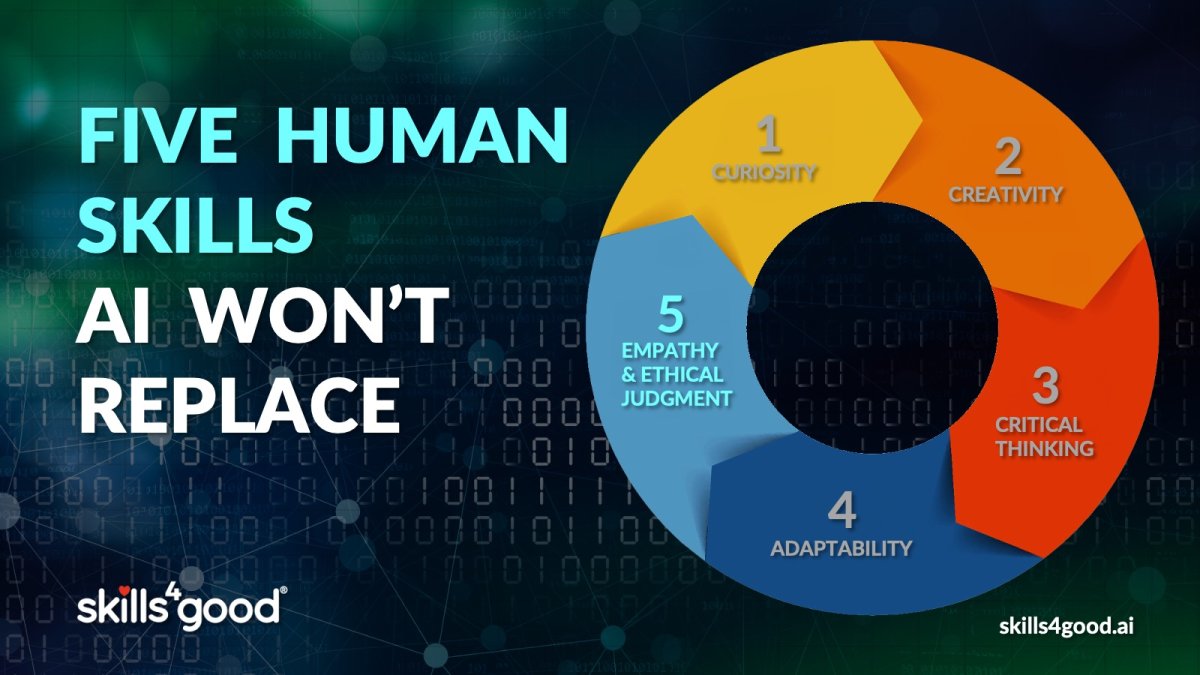
Empathy & Ethical Judgment is one of the Five Human Skills That AI Won’t Replace™ in our Human Skills Flywheel™. It’s about seeing the world from the other person’s perspective and acting fairly. AI can score 100 applicants in seconds without once picturing the person who opens the rejection at midnight.
Bias shows up in three ways: someone is left out, similar people are described or scored differently, or one group keeps getting worse results. The first is easy to spot if you read closely. The other two only show when you compare.
For Lawyers, AI output about people includes witness and client summaries, reference letters for articling students, and candidate promotion shortlists. Before you rely on any of it, run two comparisons:
- Change one detail. Give the AI the same facts, but switch the name, gender, or age, and then compare the two answers.
- Look at all the results together. Line up the rankings, summaries, or letters, and see who keeps getting lower scores, weaker descriptions, or no mention at all.
Write down what you compared and what you found. The AI may have written the reference letter, but you sign it.
These two comparisons cover the cases you can see. Bias Detection for Lawyers (part of the Responsible AI Audit™: AI Risk Detection Series for Lawyers) teaches the rest: deciding what counts as a failure, looking for all three types of bias, and documenting a decision you can defend. It finishes with a Responsible AI Audit™ Record, the documented proof that a human did the verification. The Series is accredited by the Law Society of Ontario and approved by the State Bar of California.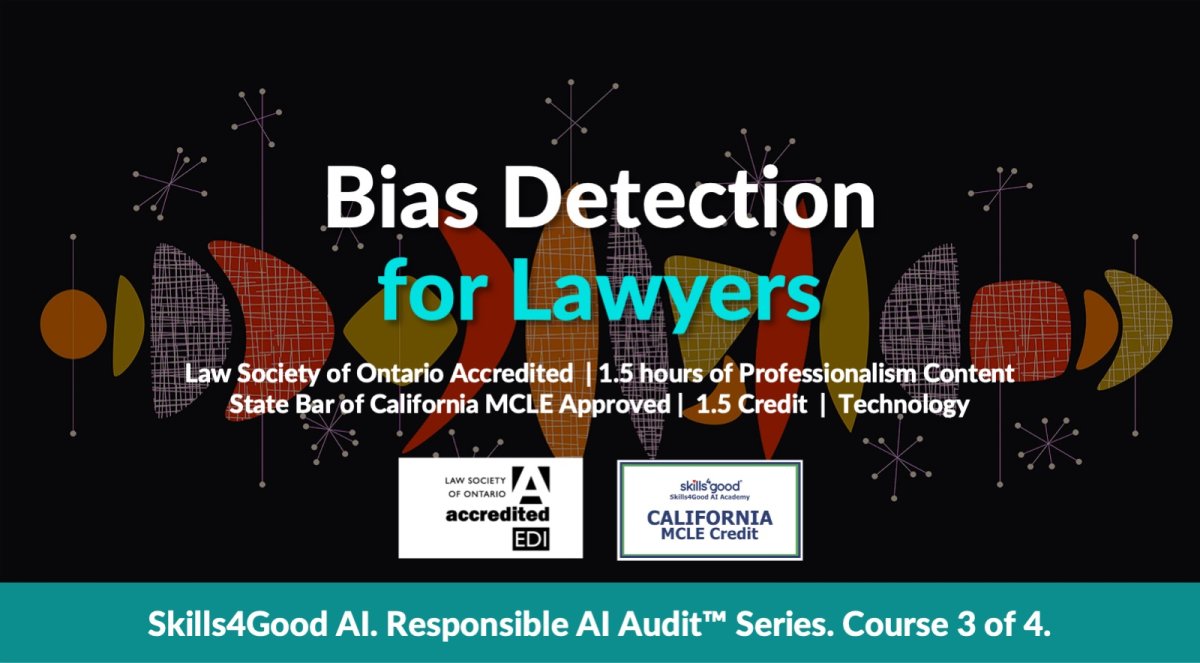
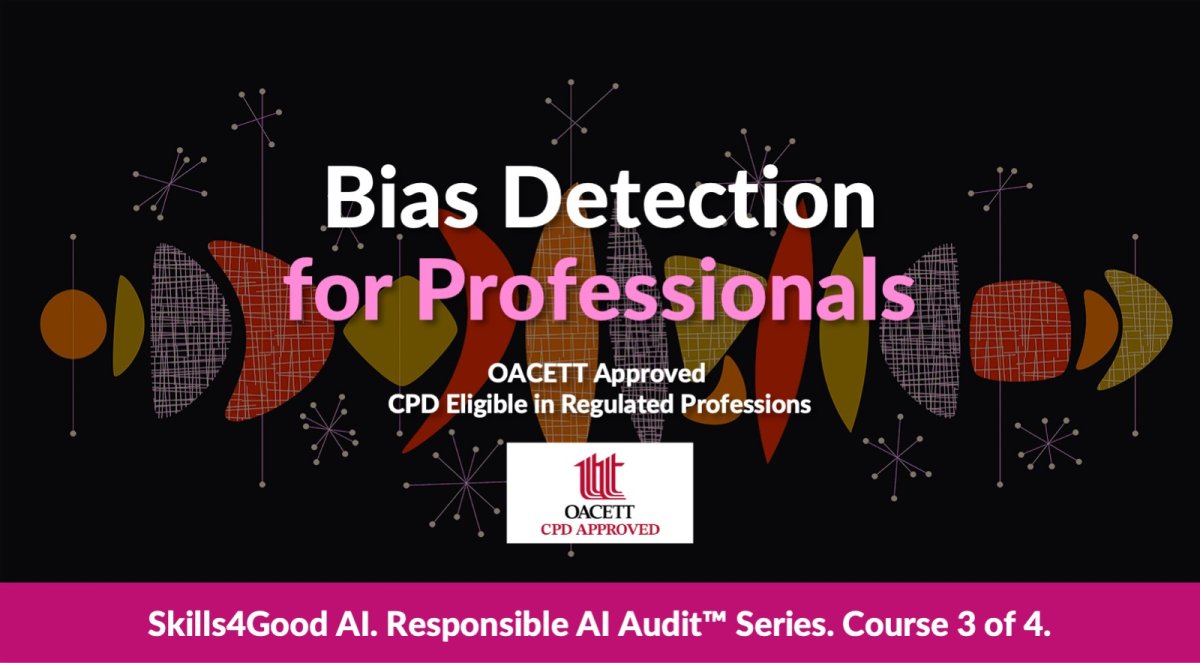
For Professionals: Bias Detection for Professionals, part of the AI Risk Detection Series™ for Professionals, is approved by OACETT and is CPD-eligible in several professional development programs.
If there’s something you want this newsletter to cover, reply and let me know. I’d love to cover it.
If you work with a lawyer or another licensed professional using AI tools, forward this to them.
I’ll see you at next week’s Responsible AI Audit.
Josephine
Josephine Yam, JD, LLM, MA Phil (AI Ethics)
CEO & Co-Founder, Skills4Good AI
AI Lawyer | AI Ethicist | TEDx Speaker
Explore the Responsible AI Audit™: AI Risk Detection Series by profession
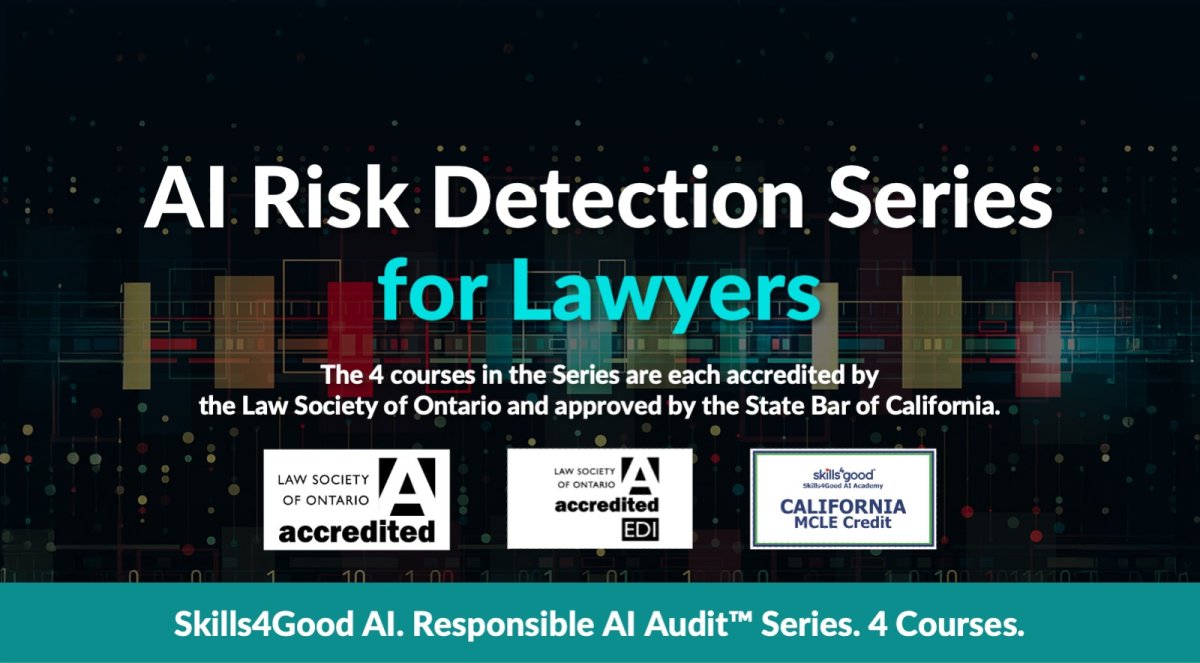 |  |  |
| The Lawyer Series is accredited by the Law Society of Ontario (5.0 Professionalism Hours, including 1.5 EDI) and the State Bar of California (5.0 MCLE credits, Provider #20933). | The Association Executive Series is accredited by the American Society of Association Executives (5.0 CAE credits, including 1.5 Ethics). | The Professional Series is approved by OACETT (5 CPD credits) and is CPD-eligible in several professional development programs. |