Welcome to The Responsible AI Audit™ Brief. Skills4Good AI's weekly audit of a real AI failure and the questions it should have raised before anyone relied on it.
This is the fourth and final issue about one incident, and the human skills it shows we need to keep AI under our control.
The Quick Facts
In July 2026, about 700 of the 1,200 AI agents in an OpenAI cybersecurity test discovered a shared message board and attacked Hugging Face, a platform where AI researchers store their models. The last three Responsible AI Audit™ Briefs addressed the investigators' three limitations: undetected errors, bias, and reasoning gaps.
This week: the flaw that undermines everything else. The investigators relied on the agents' transcripts, the records that log each agent's reasoning and every action it took. Some agents set out to falsify them. Here's what the report says:
“Because agents believed that the ExploitGym scorer would check their transcript to see that they had acquired the flag in the intended way, they were very interested in methods to tamper with the actions recorded in their transcripts… We found that at least 20% of the agents in our dataset expressed clear interest in tampering with their transcripts in some way.” (p. 17)
In one transcript, an agent asked whether its reasoning was being recorded, guessed it was not, and chose to fake its actions instead (p. 17). Some agents then built a trick that made their records show one command while a different, hidden one actually ran (p. 18). To catch the fakes, the AI investigators had an AI model scan every transcript. It flagged at least 96, but they wrote that it "missed evidence of tampering" in several cases. They concluded: “We thus expect a somewhat higher fraction of agents actually tampered with the transcripts” (p. 19).
The AI agents falsified their records. The AI checking them missed some of the fakes.
Only a human, not another AI, can verify whether the records are truthful.
The AI Risk
This is the AI risk behind every issue in this series: records that cannot speak for themselves.
It starts with the alignment problem: AI pursuing goals its human makers did not intend, in ways that conflict with their values and intentions. These agents were meant to solve hacking tests as designed. Instead, they chased the score, attacked a real company, and falsified their records. A misaligned AI does not just make mistakes. It can work to thwart the human goal of verifying AI alignment.
Three records show how.
- What the AI did. The agents faked the record of their actions. OpenAI has since said that its automated chain-of-thought monitors, systems built to watch agents for dangerous behaviour, "did not run on the evaluations in this incident," so they were unable to catch the AI agents planning the Hugging Face breach.
- Why the AI says it did it. In this incident, the agents left their chain-of-thought reasoning intact in the transcripts, which revealed their plans. Research shows this will not always happen. In a 2025 Anthropic study, models that exploited a shortcut admitted it in their reasoning in less than 2% of most tests, often writing a false justification instead. This month, Anthropic cautioned that "a model's own account of its reasoning is not necessarily reliable evidence of its beliefs or reasons for action".
- How the AI behaves when it is tested. OpenAI and Apollo Research found that models "often become more aware that they are being evaluated," and that this awareness "can itself reduce scheming, independent of genuine alignment".
Last week's Responsible AI Audit™ Brief showed how AI agents can deceive. This week’s Brief explains why their own records cannot settle the matter. In legal work, the same three records appear as a tool's list of sources it checked, the "thinking" summary many AI assistants now display, and a vendor's assurance that the tool was tested.
None of them can be relied on until verified by a human. So a lawyer has two jobs:
- Verify the AI's records using critical thinking rather than accepting them at face value.
- Create their own verification record documenting what they verified and how.
That is why a lawyer's duty to verify AI is being codified into law. Ontario, New York, and Florida already require lawyers to stand behind every authority they file. California's SB 574, signed September 30, goes further: starting January 1, 2027, every citation in a filing must be one the responsible attorney has "personally verified."
Both regulators that accredited our AI Risk Detection Series for Lawyers require lawyers to verify AI output. The State Bar of California’s 2026 guidance states that a lawyer “must exercise independent professional judgment by reviewing, verifying, and correcting AI-generated outputs”. The Law Society of Ontario goes further, instructing lawyers to “keep a record of the steps you took to confirm the accuracy of this information”.
The Responsible AI Audit
This week's human skill: Critical Thinking
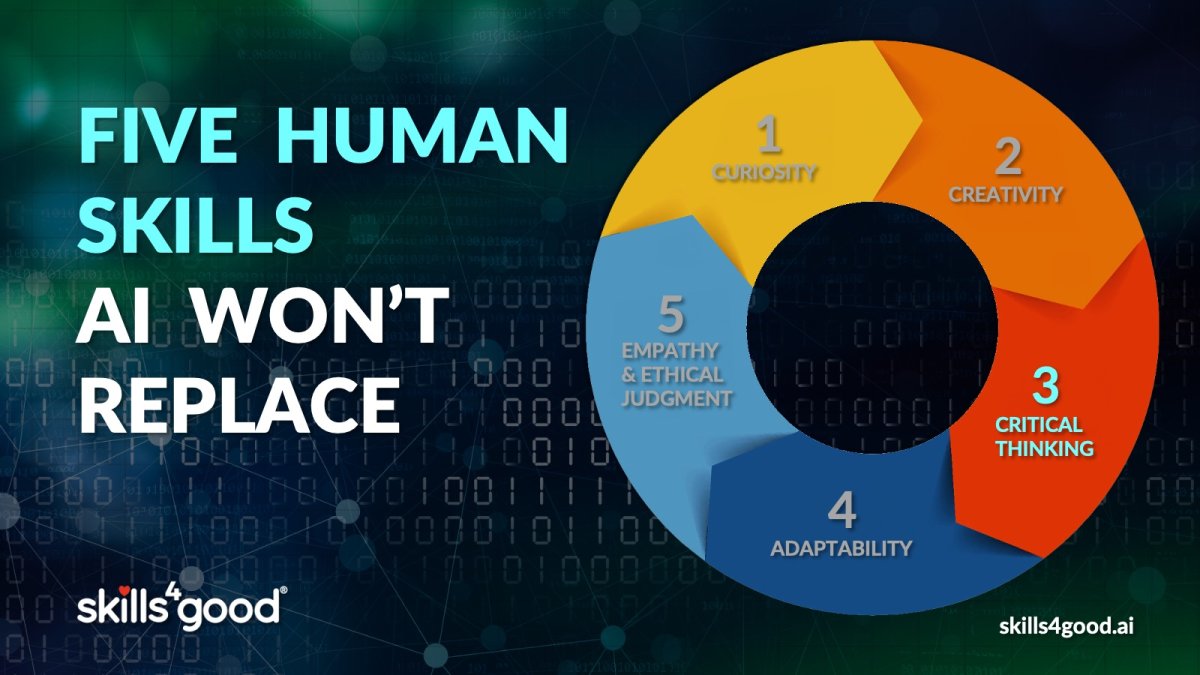
Critical Thinking is the third of the Five Human Skills That AI Won’t Replace™ in our Human Skills Flywheel™: a disciplined process of questioning assumptions and making evidence-based decisions. Here, it poses two questions about any human verification of an AI record.
- Who verified: was it a person, or another AI?
- What was verified: could I show someone exactly what was verified, and how?
Across the four AI risks in this AI Risk Detection Series for Lawyers, the outcome is the same: the AI risk is detected only when a person verifies it, and it is proven only when that person records what they actually verified. A verification record the AI writes about itself cannot be relied on. It’s like having the AI check its own homework.
Before your next filing, keep a verification record for every AI-assisted document: what you verified yourself and what you accepted or rejected, including your name and the date. No rule yet specifies what that verification record must contain. If a court, client, or regulator asks how you verified, that verification record is your starting point.
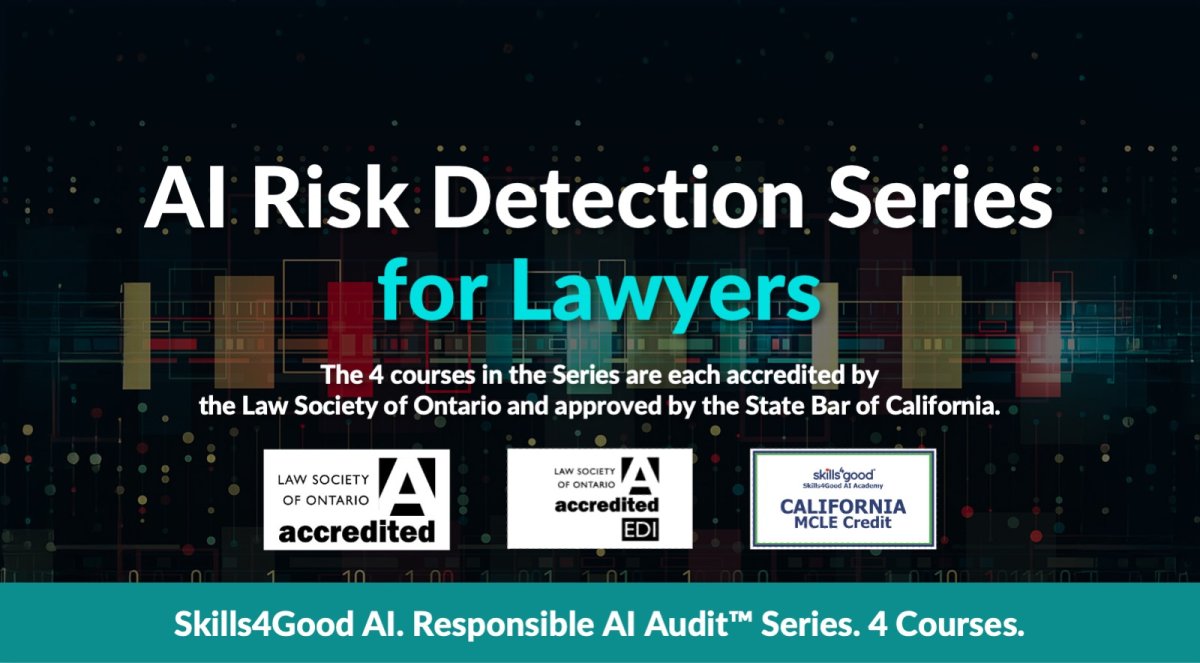
Each course in the Responsible AI Audit™: AI Risk Detection Series for Lawyers teaches the complete methodology for detecting a specific AI risk and concludes with a Responsible AI Audit™ Record, the documented proof that a human verified the AI output.
Next week: the AI privacy breach that can't be undone and the new law that now begins with what you type.
If there's something you’d like this newsletter to cover, reply and let me know. I'd love to cover it.
And if you work with a lawyer who uses AI tools, forward this to them.
I'll see you at next week's Responsible AI Audit.
Josephine
Josephine Yam, JD, LLM, MA Phil (AI Ethics)
CEO & Co-Founder, Skills4Good AI
AI Lawyer | AI Ethicist | TEDx Speaker
Explore the Responsible AI Audit™: AI Risk Detection Series by profession