Welcome to The Responsible AI Audit™ Brief. Skills4Good AI’s weekly audit of a real AI failure and the questions it should have raised before anyone would have trusted it.
This is the next in the series on The Duty to Verify AI. We're using lawyers' anecdotes to illustrate the point, but the insights and practical lessons apply to any professional with a duty of competence, a reputation to protect, and a responsibility to the public interest.
The Quick Facts
The apology was meant to end the problem.
W. Perry Hall, a lawyer in Mobile, Alabama, filed briefs in his clients' appeal with citations the Supreme Court of Alabama found to be “'hallucinations,' i.e., fake authorities created by an AI system”. In a footnote, he apologized. “The mistake will not recur,” he wrote. The next sentences in that footnote referenced two cases that do not exist.
Here's the irony: his apology for the fake cases was itself built on fake cases.
On April 24, 2026, the Court dismissed the appeal. It ordered Hall to pay the other side's costs and fees totalling $17,200, barred him from filing there without another lawyer's signature, and referred him to the state bar. The clients lost their appeal, and the Court did not rule on their arguments.
Now take that brief and replace it with a patient chart, an engineering report, or an audit file. The risk remains exactly the same.
Here’s the irony: an apology for citing fake AI cases included two more fake cases.
The AI Risk
Five people asked me this week whether hallucinations will go away once AI is smart enough. Wharton professor Ethan Mollick addresses the question in his new book, "Co-Existence: The Next Phase of AI". Better models will reduce hallucinations, he says, but “it is not clear they can ever be eliminated, though they can be reduced”. Here's why.
Three Reasons Smarter AI Won’t End Hallucinations
- It predicts. It does not look things up. AI writes the most likely next word based on patterns in its training data. That prediction is usually correct but not always, and nothing inside the model marks the difference, as Mr. Mollick explains in his book, "Co-Existence". Its error rate can be very low but is never guaranteed to be zero.
- It is trained to guess. A 2025 paper by OpenAI and Georgia Tech researchers titled “Why language models hallucinate” argues that tests used to grade AI work like multiple-choice exams with no penalty for wrong answers. When AI makes a guess, it might score. When it admits “I don’t know”, it usually does not. So AI models learn to guess confidently.
One way to reduce hallucinations is to penalize incorrect answers and reward admitting uncertainty. But an AI model that says “I don’t know” more often still hasn’t checked anything. That humility helps because it tells you exactly what to look for. The answers it gives without hesitation are the ones you still need to verify. - Its errors hide on a jagged frontier. Mr. Mollick’s term for AI’s uneven improvement: excellent at some tasks, unreliable at others that look just as easy, with no visible line between them. In a field experiment with Boston Consulting Group consultants, published in Organization Science’s article “Navigating the Jagged Technological Frontier,” those who used AI on a task just outside the frontier were “19% less likely to produce correct solutions compared with those without AI, pointing to potential limitations of AI supporting knowledge workers”. A more advanced AI model pushes the frontier out, but it remains jagged. Its errors look exactly like right answers.
Mr. Mollick has a story in his book, "Co-Existence", to make the point. He asked Claude for an example of a hallucination, and Claude came up with one: a perfectly plausible anecdote that credited a real researcher with a paper he did not write. The example of a hallucination was itself a hallucination.
Errors are becoming rarer. In a study Mr. Mollick cites, medical diagnostic errors fell from up to 24% to 0.25% between two model generations. But here’s the problem: rarer errors are checked less, and, as Mr. Mollick’s research shows, people believe errors stated confidently.
That’s why, as a professional, your duty to verify AI outputs doesn't go away as AI gets smarter. Your signature on work that used AI certifies accuracy, not probable accuracy.
In its article “The AI Risk Your Company Is Overlooking,” Harvard Business Review quotes MIT Sloan research scientist Christian Catalini, who notes: “When execution is cheap, verification becomes more valuable”.
The Responsible AI Audit
This week’s human skill: Critical Thinking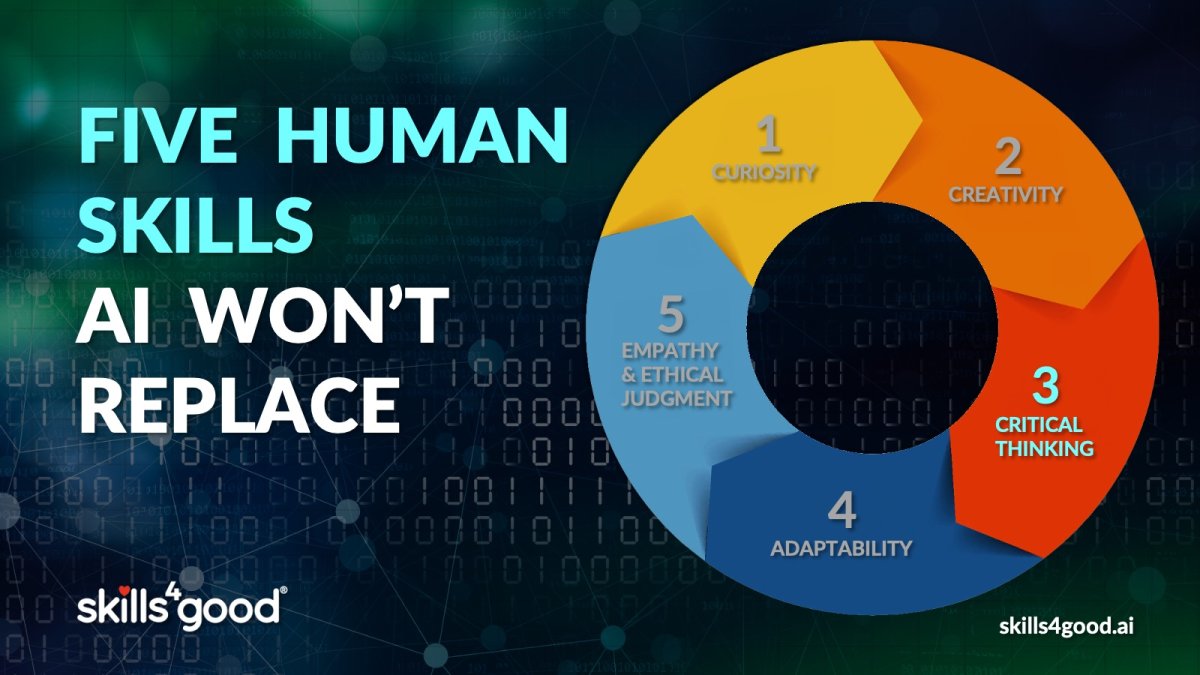
Critical Thinking is one of the Five Human Skills That AI Won't Replace™ in our Human Skills Flywheel™: testing whether an answer is actually backed by evidence before you use it. It matters most when the answer seems complete.
The jagged frontier changes how you apply it. If you cannot see where AI is unreliable, you cannot decide in advance which outputs to trust. As error rates fall, spot-checking becomes tempting. But a spot-check only works if you know where to look, and with AI you don’t. Hall was apologizing for fake cases, the moment his guard should have been highest, and the errors still got through.
So verify every source, every time. Open each one, confirm it exists and says what you claim, and record what you verified. A rare error is yours the moment you sign.
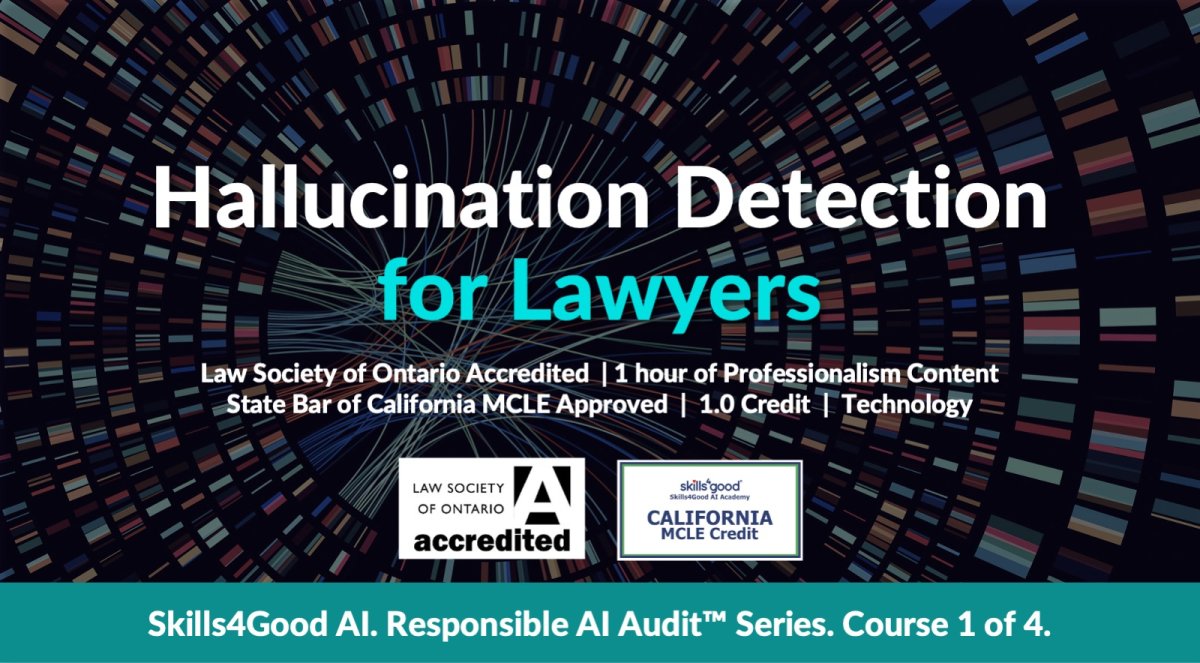 | 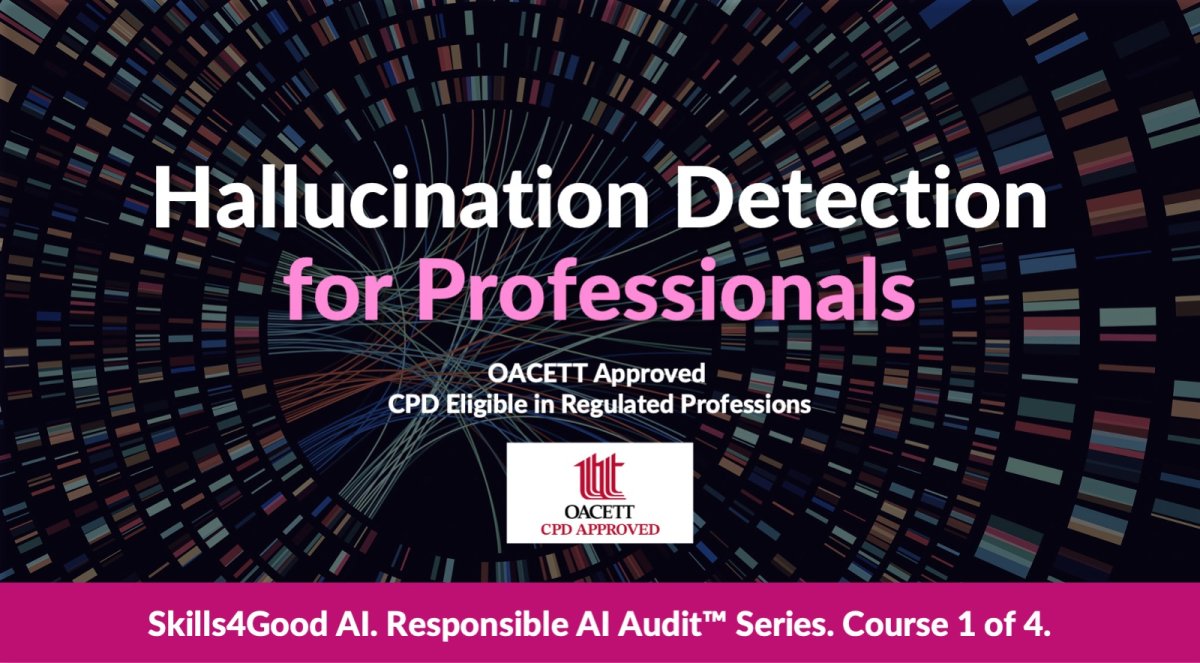 |
| Hallucination Detection for Lawyers, the first course in the Responsible AI Audit™: AI Risk Detection Series for Lawyers, teaches the full method for checking AI-generated authorities and concludes with a Responsible AI Audit™ Record, which serves as documented proof that a human has performed the verification. The Series is accredited by the Law Society of Ontario and approved by the State Bar of California. | Hallucination Detection for Professionals, part of the AI Risk Detection Series™ for Professionals, is approved by the Ontario Association of Certified Engineering Technicians and Technologists (OACETT). |
If there’s something you want this newsletter to cover, reply and let me know. I’d love to cover it.
If you work with a lawyer or another licensed professional using AI tools, forward this to them.
I’ll see you at next week’s Responsible AI Audit.
Josephine
Josephine Yam, JD, LLM, MA Phil (AI Ethics)
CEO & Co-Founder, Skills4Good AI
AI Lawyer | AI Ethicist | TEDx Speaker
Explore the Responsible AI Audit™: AI Risk Detection Series by profession
 |  |  |
| The Lawyer Series is accredited by the Law Society of Ontario (5.0 Professionalism Hours, including 1.5 EDI) and the State Bar of California (5.0 MCLE credits, Provider #20933). | The Association Executive Series is accredited by the American Society of Association Executives (5.0 CAE credits, including 1.5 Ethics). | The Professional Series is approved by OACETT (5 CPD credits) and is CPD-eligible in several professional development programs. |