The quarterly report landed in Elena's inbox at 4:47 PM on Friday. As program director for a regional food bank serving 15,000 families, she watched AI analyze six months of donor feedback and conclude: "Satisfaction scores stable at 87%. No immediate action required."
But something nagged at her as she scrolled through the executive summary filled with reassuring green checkmarks.
AI 4 Good in Action
Instead of forwarding the polished summary to Monday's volunteer board meeting, Elena made a choice that would reshape her organization's approach. She spent her weekend reading the actual donor comments—hundreds of them.
What she discovered would have been invisible to anyone who trusted the AI analysis.
Hidden beneath the stable satisfaction scores was a pattern the algorithm completely missed.
Long-term donors were using phrases like "considering other causes" and "exploring local options"—language that scored as "neutral sentiment" but actually signaled potential funding shifts.
The AI had processed words but missed the meaning. It measured satisfaction without recognizing the psychological difference between donors who give because they believe in the mission versus donors who give out of habit.
Elena's critical thinking caught what AI’s pattern recognition couldn't: the subtle language of donors mentally preparing to redirect their support.
Her decision to question the AI conclusion revealed a donor retention crisis disguised as stability—one that could affect their ability to serve vulnerable families.
The Human Skill: Critical Thinking in AI
Here's the counterintuitive truth: AI's greatest strength—pattern recognition—creates its most dangerous blind spot. The better AI gets at doing the busywork, the more we're tempted to let it think for us - instead of with us.
Critical thinking in the AI era isn't about questioning AI's accuracy. It's about questioning AI's assumptions about what to measure. AI optimizes for the metrics it can see, not the human realities it can't quantify.
What AI misses isn't just a detail - it could be your organization's next crisis.
Over To You
Deploy the "AI Assumption Audit" - a quick check to identify what human factors AI can't measure.
Before accepting any AI analysis, ask yourself: "What signs or voices might this analysis have missed?"
This simple practice transforms you from an AI user into a Responsible AI leader.
Want A Free Preview of Our AI Academy?
Start your Responsible AI journey today.
Our free Starter Course offers a 7-day preview of our framework, Responsible AI Literacy = AI Skills + Human Skills™, featuring practical lessons that you can apply immediately: 7 lessons, lifetime community access.
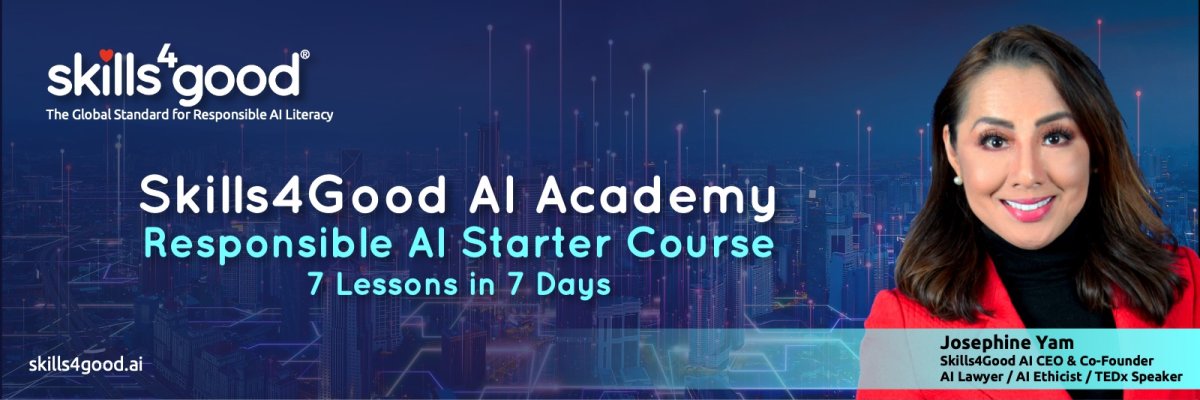
Claim your free Starter Course
You're not just learning AI skills. You're developing Responsible AI Leadership.
Josephine Yam
CEO & Co-Founder, Skills4Good AI
AI Lawyer | AI Ethicist | TEDx Speaker
Creator of the Responsible AI Literacy Framework
P.S.
Elena caught what AI missed because she thinks critically. Ready to master all 5 human skills that create Responsible AI Leadership? Claim your free Starter Course.