Welcome to The Responsible AI Audit™ Brief. Skills4Good AI’s weekly audit of a real AI failure and the questions it should have raised before anyone relied on it.
This issue kicks off The Lawyer’s Duty to Verify AI Series. Although written for lawyers, its insights apply equally to any professional with a duty of competence, a reputation to protect, and a responsibility to the public interest.
The Quick Facts
While preparing for oral argument, lawyer William Rounds discovered that two cases cited in his firm’s filed brief did not exist. He told the court they were typographical errors. But the proposed replacements, real cases with similar-sounding names, did not support the argument either.
The firm was Sethi Law Group, an Orange County immigration practice, arguing an asylum appeal before the U.S. Court of Appeals for the Ninth Circuit. At oral argument, the judges asked whether generative AI was responsible for the errors. AI “was not used,” Rounds said.
Later, the lawyers told the court that their firm had banned AI and had unlicensed law school graduates draft its brief. By their own admission, Mike Singh Sethi signed the brief without verifying its citations.
On June 3, 2026, the court imposed five sanctions, set out below.
Source: U.S. Court of Appeals for the Ninth Circuit, Lnu v. Blanche, June 3, 2026. |
Law.com’s Jeff Kerr called the order the “Playbook for AI Sanctions”, one that other courts will borrow. Any court can adopt it because it rests on duties every lawyer already owes: competence, diligence, candor to the court, and the signer’s attestation that the filing is accurate.
As the court noted, “At a bare minimum, these duties require lawyers to review the output of generative AI for fabrications and basic accuracy: Are these cases and quotations real? Does this case discuss the issue at hand?” (p. 18)
“[T]he rules are not violated at the point of research and drafting, but at the point of signing and filing.”
- U.S. Court of Appeals for the Ninth Circuit, Lnu v. Blanche, June 3, 2026
The AI Risk
The AI risk here is Hallucination: confident output with no factual support. It becomes misconduct when a lawyer fails to verify the output in their brief and still signs it to certify its accuracy.
The court was clear about what it was not punishing: “We do not sanction Sethi and Rounds for the simple fact that they or their subordinates used generative AI” (p. 13). It punished their failure to verify before signing and filing, as well as their subsequent denials.
It declared that “Sethi’s signature was an attestation that he personally reviewed the contents of the brief, including the cited authorities, and that they were accurate” (p. 22).
It also noted: “A competent and diligent attorney cannot decline to ‘vet’ citations, in a brief he signs, for substantive validity,” which the court defines as “to read the cited authorities and ensure that they are on point” (p. 23).
|
The Responsible AI Audit
This week’s human skill: Curiosity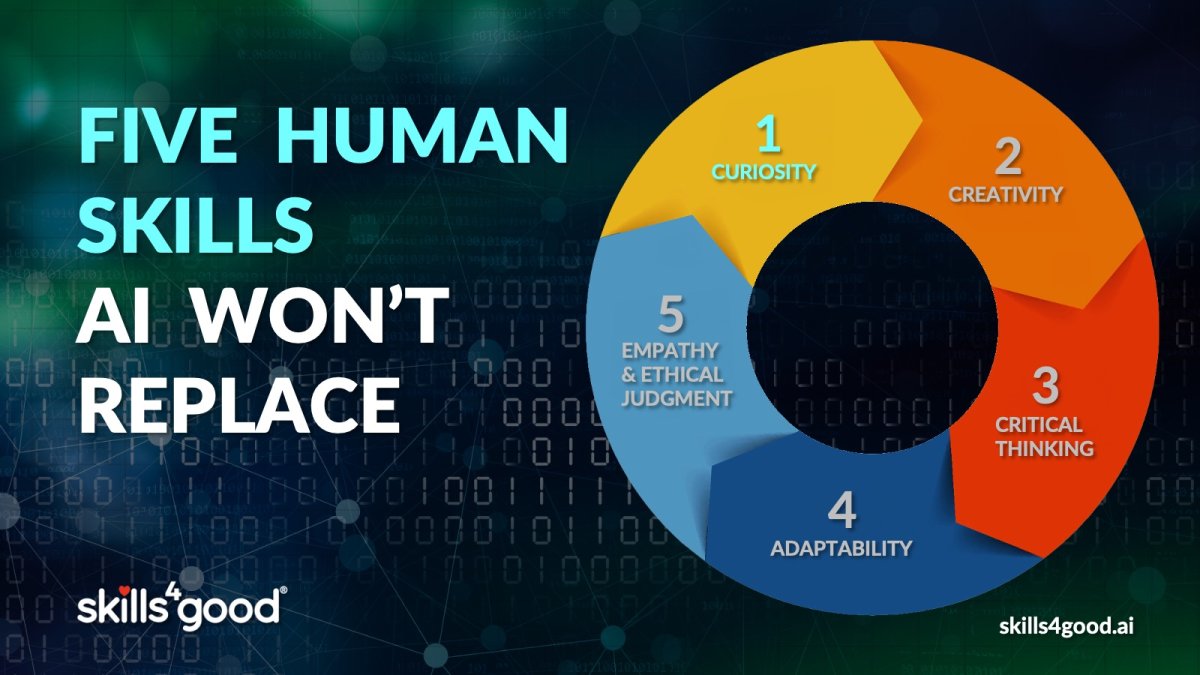
Curiosity is the first of the Five Human Skills That AI Won’t Replace™ in our Human Skills Flywheel™: the instinct to ask questions before accepting answers. Before signing, ask the harder questions.
- Have I read each authority myself, or am I trusting someone else to have done so?
- Does each case state, in its own words, what this brief says it says?
- If the judge asked me how I know that every citation is accurate, what could I show?
The court identified three types of error: “nonexistent cases, misattributed quotations, and gross misrepresentations of real cases” (p. 13). Checking whether a case exists catches only the first type. The firm’s replacement cases show why: they are real, so they pass that check, yet neither supported what the brief claimed.
Before you sign, verify each citation yourself. Open each citation at its source, confirm it exists, read the cited passage, and confirm it supports the filing's claim. Then record what you checked, how, and when. If the court ever asks, that record is your answer.
Hallucination Detection for Lawyers, the first course in the Responsible AI Audit™: AI Risk Detection Series for Lawyers, teaches the complete method for catching each of these failures, and ends with a Responsible AI Audit™ Record, the documented proof that a human did the verification. The Series is accredited by the Law Society of Ontario and approved by the State Bar of California.
If there’s something you want this newsletter to cover, reply and let me know. I’d love to cover it.
If you work with a lawyer or another licensed professional using AI tools, forward this to them.
I’ll see you at next week’s Responsible AI Audit.
Josephine
Josephine Yam, JD, LLM, MA Phil (AI Ethics)
CEO & Co-Founder, Skills4Good AI
AI Lawyer | AI Ethicist | TEDx Speaker
Explore the Responsible AI Audit™: AI Risk Detection Series by profession
 |  |  |
| The Lawyer Series is accredited by the Law Society of Ontario (5.0 Professionalism Hours, including 1.5 EDI) and the State Bar of California (5.0 MCLE credits, Provider #20933). | The Association Executive Series is accredited by the American Society of Association Executives (5.0 CAE credits, including 1.5 Ethics). | The Professional Series is approved by OACETT (5 CPD credits) and is CPD-eligible in several professional development programs. |